 Free consult

Prescription only
This page is only for people with a prescription. It is not for anyone using a peptide without a clinician. It is educational information, not medical advice, a prescription, or instructions for reconstituting or injecting a specific peptide.
Read this first: handling does not establish safety
General injection-safety guidance can help explain how contamination occurs and how it is prevented. It does not establish that a research-grade peptide is safe for human use, accurately labelled, sterile, free of endotoxins, or suitable for injection.
Follow the official instructions for an authorised product, and only under the prescription you were given. Consult a qualified healthcare professional before you change anything about how a prescribed product is prepared or stored.
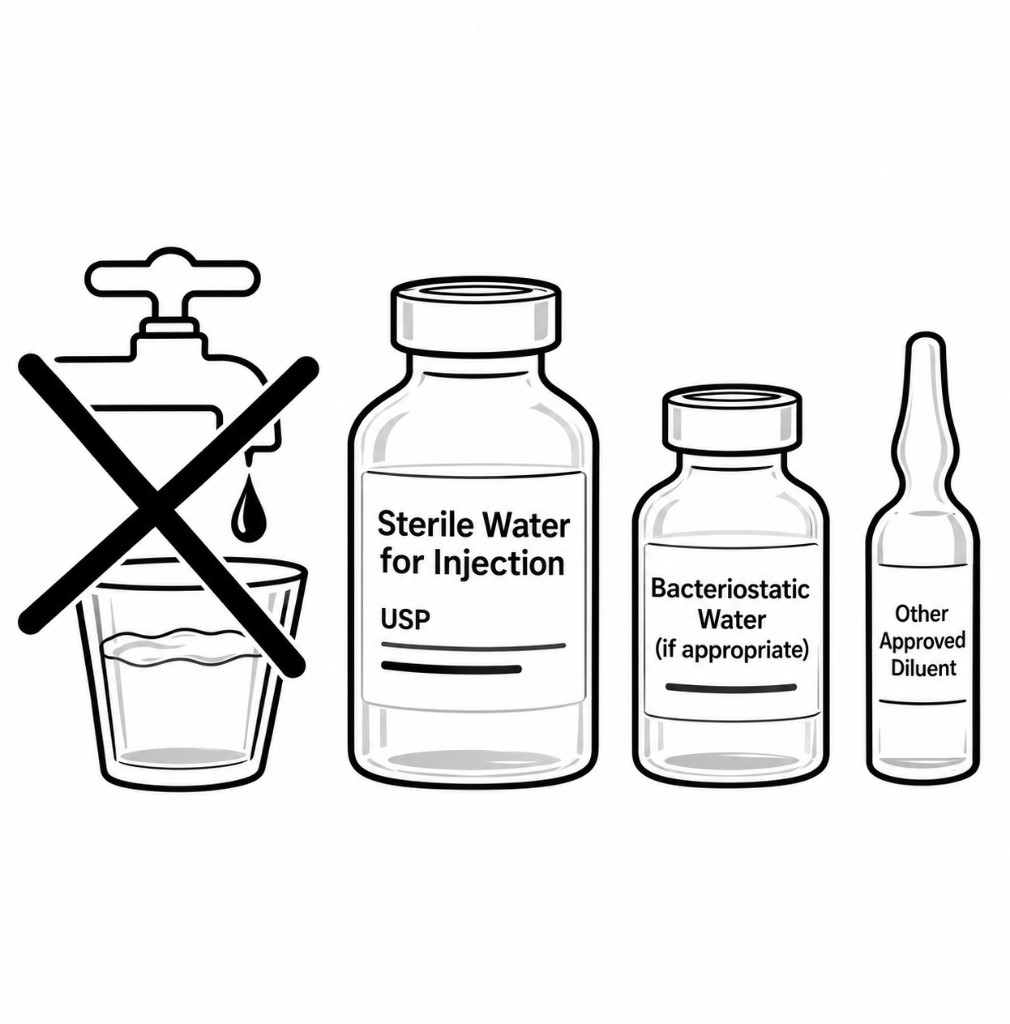
Water and preparation fluids
Established principleTap water is not sterile and must not be used to prepare injectable medication. The appropriate preparation fluid must be specified by the product's official instructions or determined by a qualified pharmacist.
Sterile Water for Injection and bacteriostatic water are not automatically interchangeable. Their composition, intended use and suitability differ. Do not select a diluent based on advice for a different medication or peptide.
Sources: United States Pharmacopeia (USP), Sterile Water for Injection; CDC, Preventing Unsafe Injection Practices.
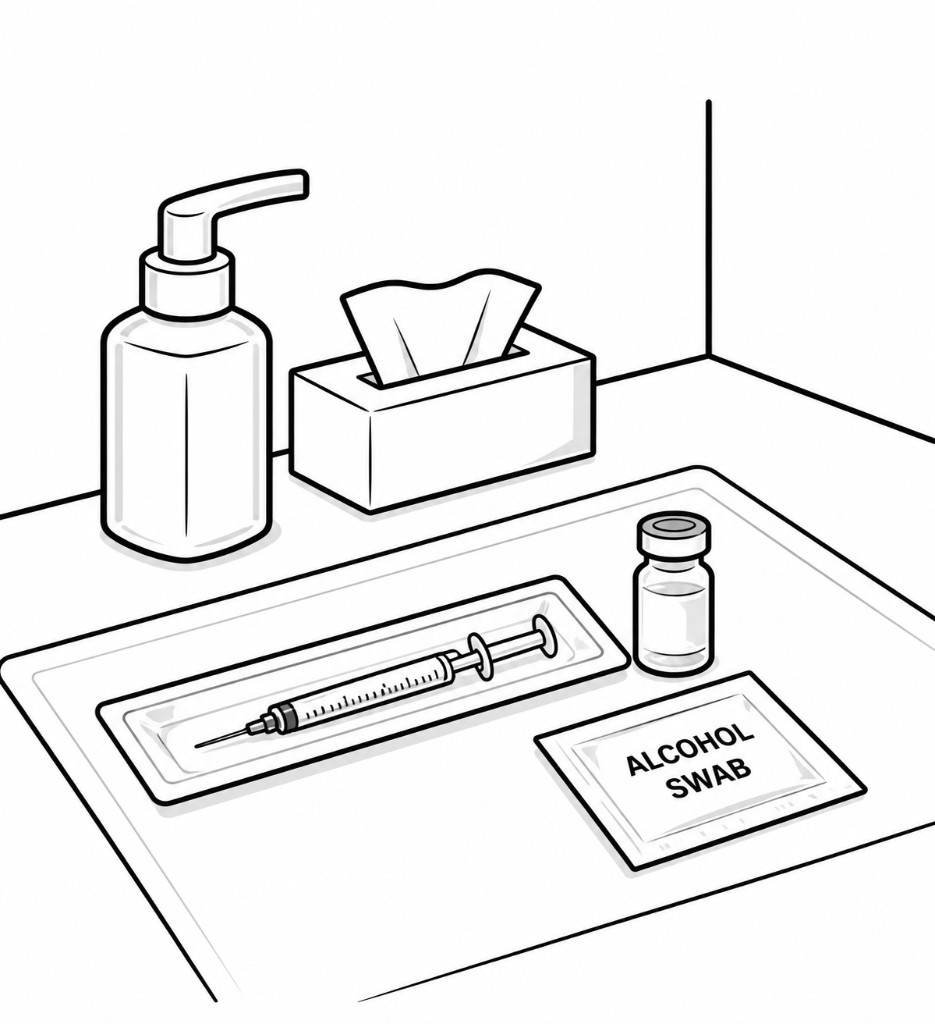
Clean handling and contamination prevention
Established principleInjectable medicines require appropriate aseptic handling. Preparation should take place in a suitable clean area, away from potential contamination sources, and in accordance with product instructions and professional training.
- Use a new sterile needle and syringe for every injection and every vial entry.
- Never reuse a syringe, even if the needle is changed.
- Follow official instructions for disinfecting vial closures and allowing the disinfectant to dry.
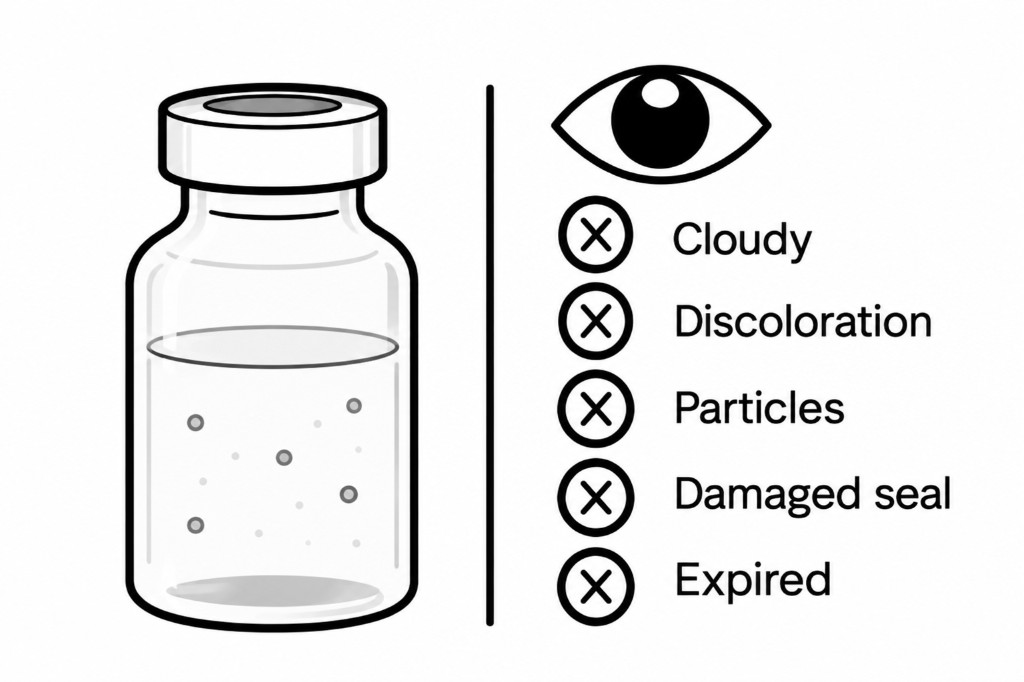
- Do not use a product if its container is damaged or sterility may have been compromised.
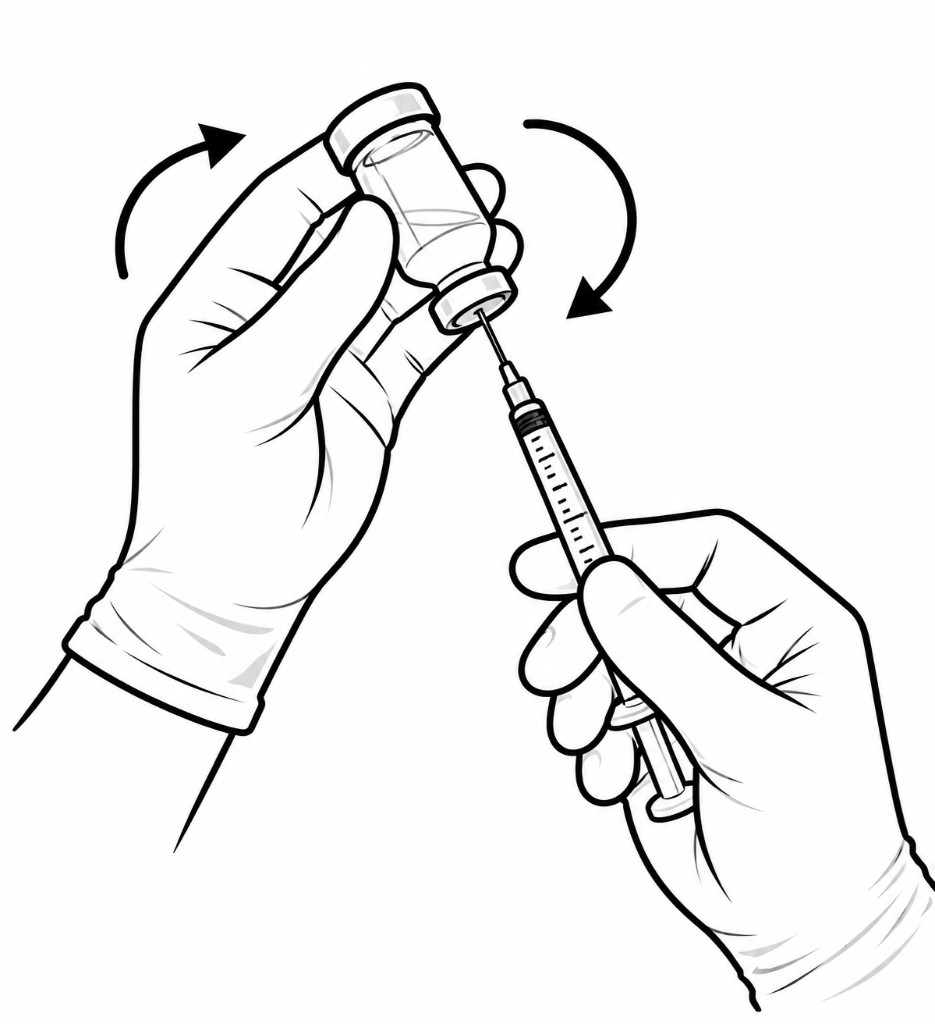
Mixing, shaking and agitation
Product-specific evidence requiredThere is no reliable universal rule that every peptide must never be shaken. A molecule's sensitivity to agitation, temperature, light and handling depends on its formulation and the available stability evidence.
Only follow a specific “do not shake,” mixing or handling instruction when it is supported by the relevant official product documentation or suitable stability research. Do not infer a rule for one peptide from another.
Evidence limitation: CDC injection-safety guidance addresses infection prevention. It does not establish peptide-specific stability or a universal no-shaking rule.
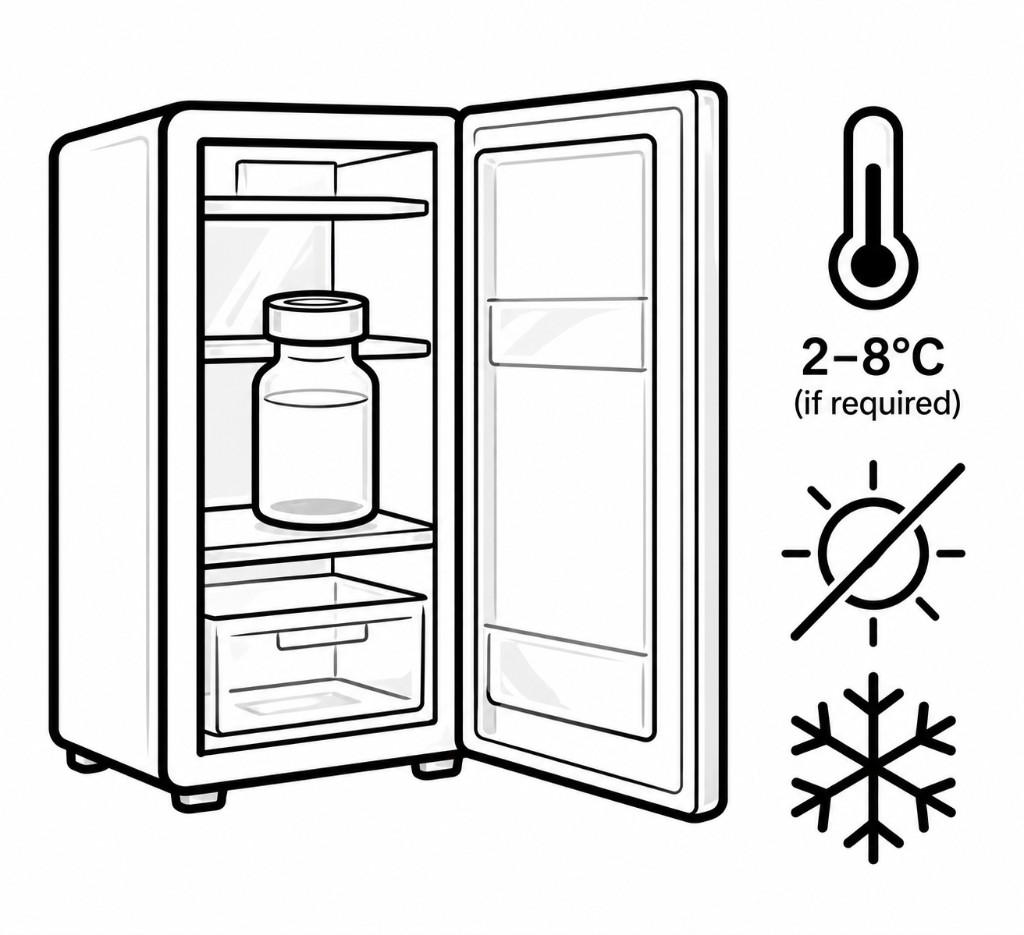
Storage, temperature and expiry after preparation
Product-specific evidence requiredStorage requirements depend on the exact substance, formulation, packaging and whether the product has been opened or prepared. Do not assume every peptide needs refrigeration, that freezing extends its usable life, or that one storage temperature fits all products.
Use the relevant authorised product instructions or validated stability data for temperature limits, light protection and any time limit after opening or preparation. Do not use a product when its storage history or integrity is uncertain.
Sources: CDC, injection safety and vial handling; USP General Chapter <797>, Pharmaceutical Compounding—Sterile Preparations.
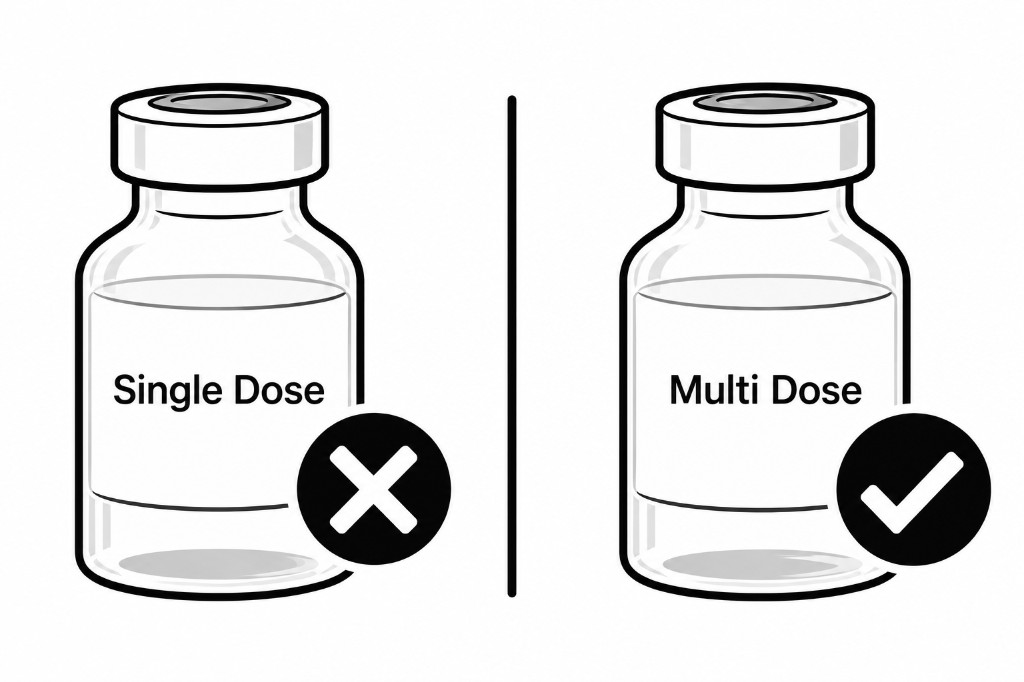
Single-dose and multidose vials
Established principleA single-dose vial is intended for one patient for one procedure or injection, as defined by its labelling and applicable guidance. Do not treat leftover contents as reusable merely because liquid remains, and do not pool leftovers from separate single-dose containers.
Use multidose containers only when they are clearly labelled for that purpose and follow their official instructions. A preservative does not eliminate the risk of contamination.
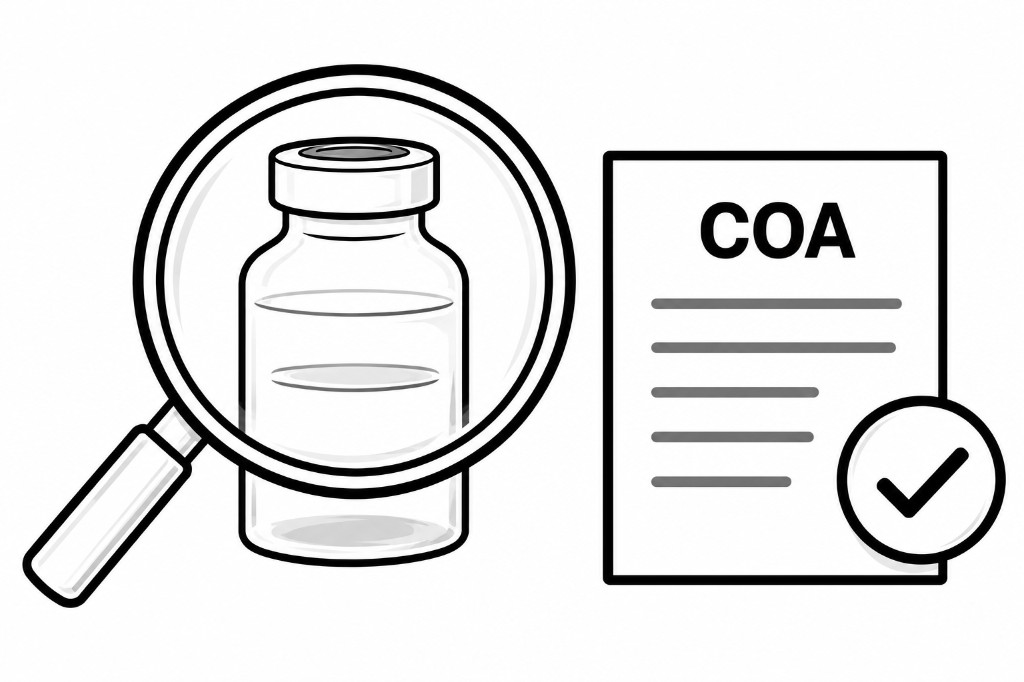
Product quality, sterility and certificates of analysis
Important limitationA clear solution, professional label or certificate of analysis (CoA) does not, by itself, prove that a product is sterile, free of endotoxins, accurately concentrated, free of impurities, or suitable for human use.
These are separate quality questions. A document is only as useful as its scope, methods, sample traceability, laboratory competence and ability to link the tested sample to the actual batch. A purity result alone is not proof of sterility.
“Research use only” labelling does not establish suitability for human use. Unapproved products may have unverified identity, quality, strength or safety.
Source: US Food and Drug Administration (FDA), Compounding and FDA: Questions and Answers.
How to read the evidence labels
Established principle
Supported by official public-health or pharmaceutical guidance, such as preventing reuse of injection equipment.
Product-specific evidence required
Cannot be safely generalised across peptides. Examples include diluent compatibility, refrigeration, light sensitivity and agitation limits.
Important limitation
A claim that cannot be established by the cited source, or a quality issue that requires separate verification. Forum posts and vendor claims should not be presented as established medical facts.
Primary sources and further reading
These sources support the general safety principles described above. They do not collectively validate any particular research peptide for human use.
-
Centers for Disease Control and Prevention (CDC)
Preventing Unsafe Injection PracticesInjection hygiene, vial handling and prevention of contamination.
-
CDC
Injection SafetyPublic-facing information on safe injection practices and associated risks.
-
United States Pharmacopeia (USP)
General Chapter <797>: Pharmaceutical Compounding—Sterile PreparationsStandards and principles relevant to sterile compounding. Some content may require USP access.
-
USP
Sterile Water for InjectionPharmaceutical reference for this specific sterile preparation fluid.
-
US Food and Drug Administration (FDA)
Compounding and FDA: Questions and AnswersRegulatory and quality considerations for compounded drug products.
Jurisdiction note: These are US sources. Before relying on this page outside the United States, check the requirements that apply where the prescription was issued, including Thai FDA rules where relevant. Links and guidance should be reviewed periodically for updates.
This page is for general education and only for people who already have a prescription. It does not provide a diagnosis, treatment recommendation, dosage, reconstitution recipe or injection protocol. For personal medical decisions, consult a qualified healthcare professional.
A source-backed overview of injection hygiene, contamination prevention, handling and storage. Established guidance is separate from product-specific claims.
Educational reference · Sources reviewed: October 2026 · Not a dosing or administration protocol